

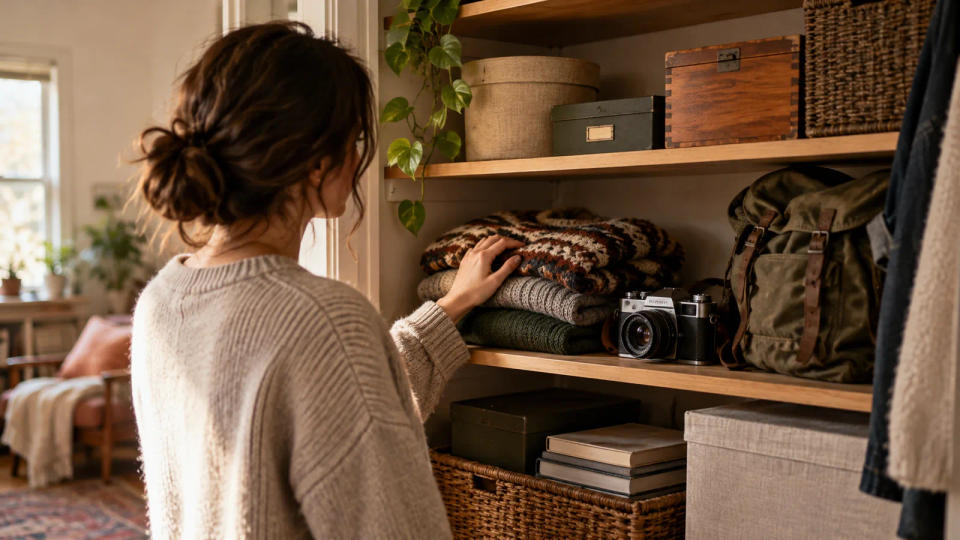
Open a cupboard you rarely visit and you may find a familiar cast of characters: the sweater you wore twice, a camera you meant to learn, a set of glasses saved for a dinner party that never happened. You probably know they are there. You just haven't had a good reason to reach for them.
So why do we keep things we haven't used in years? Often because the object has quietly become more than an object. It might stand for money already spent, a memory worth protecting, or a version of life we still imagine living. Knowing which reason is at work makes it easier to decide what deserves space in the home you have now.
The unused shelf is full of unfinished stories
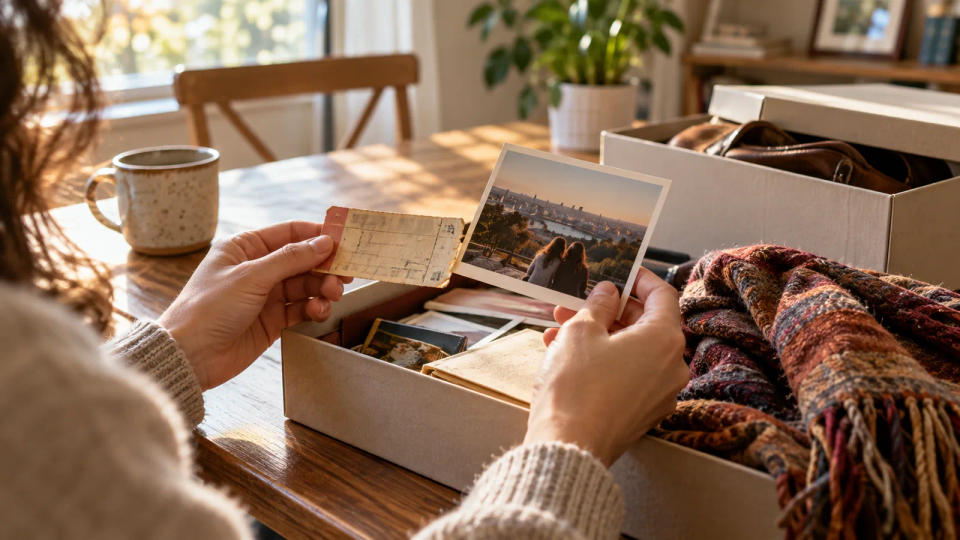
Consider the expensive running shoes at the back of a closet. They are not only shoes. They are the mornings you hoped to get outside before work. A cake pan might remind you of the year you wanted to bake every weekend. A box of souvenirs may be the quickest way to revisit a trip that still makes you smile.
That's why asking only "Have I used this recently?" can feel strangely harsh. You're answering a question about usefulness while the item is asking you to remember something else. The practical question and the emotional one are both real, but they don't need the same answer.
Some belongings are worth keeping purely because you love them. A handwritten note from your grandfather doesn't need to earn its place by being useful. Trouble begins when everything gets treated like a keepsake, including worn-out chargers, unused kitchen gadgets, and shirts that no longer suit you. The shelf gradually fills with decisions that have never quite been made.
"I might need it someday" is an appealing argument
The spare adapter might fit a future laptop. The extra vase might be useful when you host. The backpack could come in handy on a trip. None of these possibilities is impossible, which makes "just in case" hard to argue with.
But possibility isn't the same as likelihood. There is a difference between keeping a basic tool you use every few months and keeping six mysterious cables because one might belong to something. The first has a clear job. The second asks your home to provide free storage for a vague future.
Try giving "someday" a little detail. What exactly would happen? When might I use it? Would I know where to find it? If I didn't own it, could I borrow, replace, or do without it? You may discover that some backup items genuinely make life easier, while others have survived on an imaginary scenario.
There is no universal rule about the number of months an item can sit unused. Winter gear and emergency supplies are different from duplicate water bottles or a hobby kit still sealed after several years. Context matters more than a dramatic deadline.
Money, gifts, and our former selves complicate the choice
A pricey purchase can be especially stubborn. Donating a jacket may feel like admitting the money was wasted. Yet keeping it doesn't return the purchase price; it only changes where you continue to pay for it, perhaps in crowded drawers and the effort of moving it around. Selling is sensible when the item has real resale value and you are willing to do the work. Otherwise, giving it a useful second home may be the more realistic choice.
Gifts bring a different sort of hesitation. You appreciated the thought, even if the object was never right for your space. It can help to separate gratitude for the person from responsibility for storing the present forever. Keeping one particularly meaningful gift is different from keeping every gift out of obligation.
Then there are the belongings of an earlier version of you: the language textbooks from a brief burst of enthusiasm, the formal clothes from a different job, or the guitar you once played every evening. They are tangible proof that the chapter happened. Letting one go doesn't mean dismissing that chapter.
This is where it's useful to slow down. You might want the guitar back in your life; you might simply miss the time when you played it. Those are two very different reasons to keep it.

Ask better questions than "keep or throw away?"
A giant clean-out invites a giant argument with yourself. Instead, pick up one item and ask four smaller questions:
- What am I actually keeping? Is it the object's function, a memory, the money I spent, or a plan I have not acted on?
- Does this fit my life now? Not the apartment, routine, or hobbies I hope to have someday, but the week I'm currently living.
- What would happen if it left? Would I miss the object itself, need to replace it soon, or simply feel uneasy for a little while?
- Is there a smaller way to keep what matters? One photo, one favorite piece from a collection, or a note about the story may be enough.
Answers don't have to result in a donation bag. Sometimes they reveal that an old item truly belongs in your home. Give it an intentional place instead of leaving it in an anonymous box. If you still can't decide, create a small "review later" container, write a date on it, and revisit it after a reasonable interval. Avoid letting that box become permanent overflow.
And be careful with other people's belongings. A partner's childhood books or a parent's dishes may carry meaning you cannot see. Ask before you move, sell, or donate anything that isn't yours.
A realistic way to begin this weekend
Choose one contained space, not the whole house: a bedside drawer, a single kitchen shelf, or the back corner of a wardrobe. Give yourself twenty minutes. Put the things you know you use back first, then look at the rest. Set aside anything broken or unusable for appropriate recycling or disposal, and place genuinely useful extras in a donation or selling bag.
Take the harder items one at a time. Imagine finding the old camera from the opening example. If you enjoy looking at it, display it. If you're genuinely ready to learn photography, put a specific outing on your calendar and keep the camera somewhere accessible. If it has sat untouched through several promises to yourself, consider selling it or giving it to someone who will use it. Each choice respects a different truth.
Finish the job by deciding where the outgoing items will go. A donation bag that stays in the hallway for six months is just another storage system. Check local collection rules for electronics, textiles, and damaged items rather than assuming everything can be donated.
You don't need a minimalist home or a strict one-year rule. You need room for the things that are useful, comforting, or meaningful to you today. The aim isn't to erase your past or stop imagining the future. It's to notice when a possession is quietly asking you to carry a story you've already finished telling.