


Some afternoons look perfect on paper. No meeting in an hour, no urgent call, and plenty of space to finish the work you've been postponing. Yet by dinner, the task is still open. You have collected more notes, adjusted a few details, and somehow made less progress than on a much busier day.
Having too much time can make you less productive because a distant finish line makes it easy to delay the first useful step, expand the task, and keep polishing after the work is already good enough. The answer is not to fill every spare hour. It is to give a generous block of time a specific result, a reasonable working window, and a clear stopping point.
Why an open afternoon can turn into a slow afternoon
Picture a writer with a brief article due next week. On a busy Tuesday, they might draft the main argument in 50 minutes because another commitment follows. On an open Friday, the same writer may spend the morning comparing introductions, checking extra sources, and reorganizing notes before writing a full paragraph.
The task has not become harder. Its edges have become less visible. When there is no immediate need to choose what matters, every possible improvement can seem equally worth exploring. A wide time window quietly becomes permission to do more preparation, more checking, and more revising.
That does not mean pressure always improves performance. Some work genuinely needs time for reflection, testing, or recovery. But there is a difference between time spent improving an outcome and time spent keeping the work open. An open afternoon is useful only when you know what progress should look like inside it.

How extra time quietly stretches the job
The first change is often a delayed start. “I have all day” sounds reassuring, but it also removes the reason to begin at 10 rather than 11. A quick household chore or another cup of coffee feels harmless because the afternoon still looks enormous.
Next comes expanding scope. You planned to send a two-page proposal but decide it needs a comparison chart, then a redesigned opening, then five more examples. Some additions might help. Others simply consume the space available. The important question is whether the new work changes the decision your reader or client needs to make.
Finally, the finish line moves. Without a definition of done, proofreading turns into rewriting and a solid draft starts to feel unfinished. You may work for hours without producing something you can send, submit, or use.
Research offers a useful, limited clue. In a series of workplace studies, researchers found that people who expected idle time after a task sometimes slowed their pace and took longer to complete it. That finding does not prove every open day is unproductive; it simply shows why the amount of time available can affect the pace of work. You can read the study abstract if you want the details.
Give a task a finish line before giving it more hours
Start with an output, not a duration. “Work on the presentation this afternoon” leaves room for endless adjustments. “Create an eight-slide draft that explains the problem, shows two options, and ends with a recommendation” gives you an observable result. You can see whether it exists.
Then choose a realistic working window. If you expect the draft to take 75 minutes, reserve roughly 90 minutes, not the entire afternoon. The extra 15 minutes are a cushion, not an invitation to add three more sections. For uncertain or creative work, estimate in stages rather than pretending the whole project has a predictable duration.
Set one mid-task checkpoint. For example: after 25 minutes, there should be a rough outline; after 65 minutes, a complete but imperfect first pass. A checkpoint is not another complicated schedule. It is a quick test that tells you whether preparation has become a substitute for doing.
Most importantly, write a stop rule. It might say, “Send when all requested points are covered, the numbers are checked, and one final read finds no major problem.” That keeps quality in the process without letting perfectionism invent new requirements near the end.
What this looks like when you have the whole afternoon
Suppose you have four open hours before a project update and need to prepare a client summary. Your old approach is to leave the task on your list and work on it whenever you feel ready. You open background material, fix the formatting, revisit old messages, and discover it is almost time to leave.
Try a narrower agreement with yourself. The deliverable is a one-page summary covering what changed, what is blocked, and what happens next. You will spend 15 minutes collecting the facts, 45 minutes writing, and 15 minutes checking names, dates, and accuracy. At the end, you will send the summary if those requirements are met.
What happens to the remaining time? It remains available. You can take a proper break, deal with another useful task, or work ahead without stretching the original assignment. The aim is not to reward speed with more obligations. It is to stop one job from absorbing the whole day by default.
There is an important exception. If the draft exposes a factual gap, a safety concern, or a genuinely unresolved decision, do not force it out to meet an arbitrary timer. Record what is missing and schedule the next step. A stopping rule should protect good work from needless expansion, not excuse careless work.
Try a three-part experiment on your next spacious day
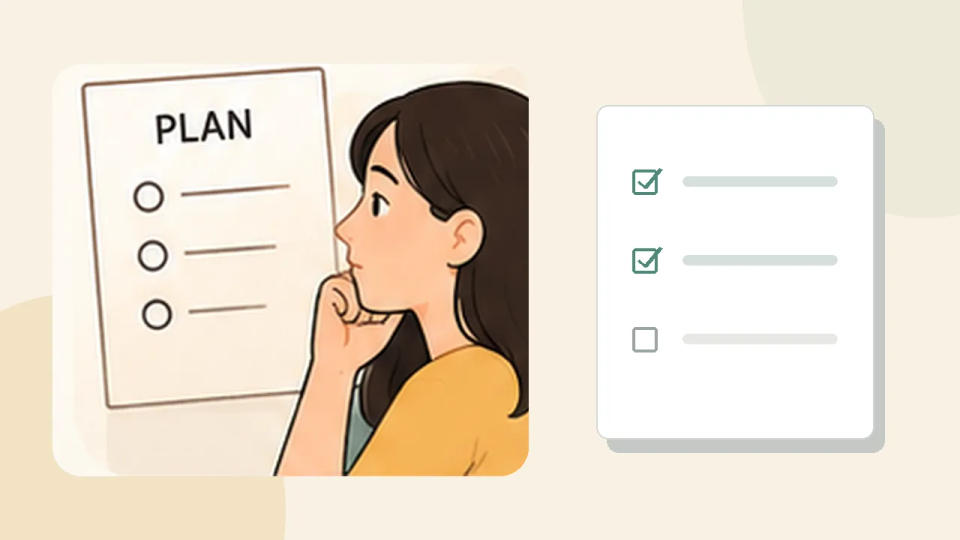
Choose one task you regularly let spread across several hours. Before starting, write three short lines on paper: deliverable (what will exist), work window (when you will make the first complete version), and done test (what must be true before you stop). Keep them visible while you work.
At the midpoint, ask only two questions: “Do I have something concrete yet?” and “Is the extra work necessary for the promised result?” If the answer to the second is no, set that idea aside. You are not banning creativity; you are separating useful improvements from optional ones.
When the window closes, review the output rather than judging yourself by the number of hours spent. If it meets the done test, close it. If it does not, identify the actual gap and give that gap its own small work session. Repeat this with a few different tasks and adjust the windows based on what you learn.
More free time is an opportunity, not a requirement to work slowly or continuously. A calm day can include focus, unhurried thought, and genuine rest. The useful shift is simple: decide what finished looks like before the afternoon starts deciding for you.