


You are waiting for the kettle to boil. Without deciding to, you unlock your phone, glance at the same messages you saw five minutes ago, and put it down. Before the water is ready, you have checked again. No notification sounded. Nobody was expecting a reply. There was simply a spare moment, and your hand knew what to do with it.
We keep checking our phones when nothing is new because the act of checking has become a familiar response to waiting, uncertainty, boredom, and small changes in attention. Sometimes we hope for a message. Sometimes we are trying to avoid the awkward first minute of a task. And sometimes there is no particular reason at all.
The useful question is not whether you have enough willpower to stop. It is what happens in the few seconds before you reach for the screen.
The check that begins before you notice it
Think about the moments between things: after sending an email but before opening the next document, at a red light as a passenger, while an elevator is coming, or just after you sit down with lunch. Nothing in those moments requires a phone. Yet they have a similar shape: your attention is temporarily unoccupied.
Your phone offers an almost effortless next move. Unlike choosing a book or starting a conversation, checking takes no preparation. You can do it standing up, with one hand, and without thinking about what you want to find.
That is why the habit can feel puzzling. You may even be annoyed as you notice yourself opening an app you closed a moment earlier. The movement began before a clear intention formed.
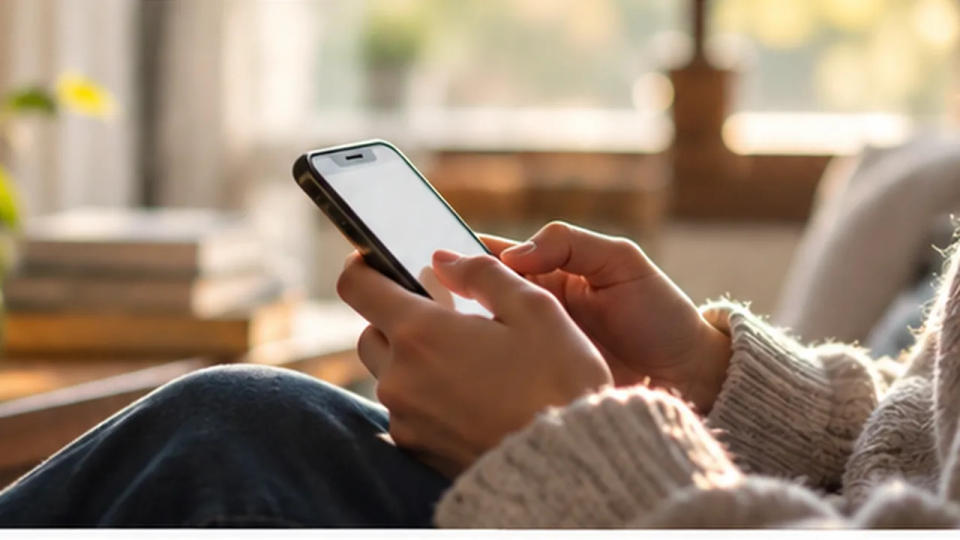
What are we expecting to find?
Part of the pull is possibility. Most checks reveal nothing important, but occasionally one brings a message from someone you care about, a useful update, or something genuinely interesting. Because you cannot predict which check will be worthwhile, it is easy to try one more time. This is one plausible part of the pattern, not proof that every phone check is driven by a single brain chemical.
There is also the question of being reachable. If you are waiting for a job-related reply, planning to meet a friend, or keeping an eye out for news about a family member, looking at the screen can briefly settle the question, “Did I miss anything?” The reassurance lasts only until the uncertainty returns.
Researchers have examined spontaneous smartphone checking specifically: looking at a phone without a notification or a deliberate goal. A 2023 paper in Applied Cognitive Psychology describes it as distinct from checking prompted by an alert. Another study published in Computers in Human Behavior found that, among its participants, silencing phones was associated with more checking for certain users. Neither finding means everyone behaves the same way, but both make one point clear: notification noise is not the whole story.
Why the habit survives an empty screen
A familiar sequence can do the work of a decision: you finish one task, feel a tiny lull, reach for the phone, and receive a moment of novelty or relief. Repeat that in enough everyday settings and the lull itself becomes a cue. An empty inbox does not erase the cue.
For some people, the trigger is an uncomfortable transition. Starting a difficult assignment is harder than glancing at a screen. For others, it is low-level social curiosity: an unfinished group chat, a possible invitation, a reply that has not arrived. It can also be a way of filling a gap that once would have held a passing thought, a glance out the window, or nothing in particular.
This helps explain why simply turning off every alert may not solve the problem. Fewer interruptions can be helpful, but if the urge begins internally, you also need to change what you do when a familiar cue appears.
Make the next check a choice instead of a reflex
Start by noticing one repeatable moment rather than monitoring yourself all day. Perhaps it happens whenever a meeting ends or whenever a video pauses. For two or three days, quietly note what came just before the check: waiting, worry, fatigue, or the wish to avoid beginning something.
Then try adding a tiny bit of friction. Put the phone on a shelf while you cook. Keep it inside your bag while you walk to get coffee. Leave it across the room for the first ten minutes of a task. This is not a permanent ban; it is a way of creating enough space for an actual decision.
When your hand moves toward the phone, ask one practical question: What am I checking for? If you can name a reason—directions, a promised reply, the train schedule—check it and move on. If you cannot, give the moment a different ending. Stretch your shoulders, take a sip of water, finish the paragraph in front of you, or simply wait for the elevator.
You can also make useful messages easier to distinguish from optional updates. Keep alerts for people and services you truly need to hear from, and reduce less important badges or previews. If you like seeing your patterns, Screen Time on iPhone reports pickups and notifications, while Digital Wellbeing on Android can show unlocks and app use, depending on your device. Look for one recurring situation rather than chasing a perfect daily number.
What a more intentional day might look like
Imagine a normal workday. You check your messages over breakfast because you actually need to confirm a plan. That is a useful check. When you reach for the phone again while your laptop starts, you notice that you are only waiting. You leave it where it is and open your first file instead.
After lunch, you are expecting a delivery update. Rather than peeking every few minutes, you decide to check when you return to your desk, unless an essential alert comes through. Later, while waiting in line, you may still take out your phone. You might even scroll for a while. The difference is that you know you chose to.
There will be days when you check far more often—when you are tired, coordinating something complicated, or waiting for important news. A gentler habit is not measured by never touching your phone. It is measured by whether more of those small moments belong to you.
Phones are helpful precisely because they make information and connection so accessible. The goal is not to turn every idle minute into a productivity exercise. It is to let a quiet moment stay quiet sometimes, and to pick up your phone when there is something you actually want to do with it.