


A home can be clean, stylish, and still feel strangely tiring. Sometimes the problem is not that anything is “wrong.” It is that your eyes keep landing on small piles, the overhead light feels too bright, the chair you actually use is not very comfortable, or everyday items never seem to have a place to go.
Making your home feel calmer does not require a renovation, a shopping spree, or a perfectly minimalist room. The fastest changes usually come from reducing small sources of friction and making comfort easier to reach. Start with the parts of your home you see and use most, then make a few choices that help the space feel quieter, softer, and easier to live in.
Start with what your eyes notice first

1. Clear the surfaces that greet you. You do not need to declutter the whole house. Pick two or three surfaces that repeatedly catch your attention: the entry console, the kitchen counter, the coffee table, or the end of the dining table. Remove anything that belongs somewhere else, then leave only what is useful or genuinely pleasant to look at.
This works because visual noise tends to multiply. A counter with a few unopened packages, receipts, chargers, and half-used items can make an otherwise comfortable room feel unfinished. Clearing one visible surface gives the room a place for your eyes to rest.
For example, if your entryway becomes a drop zone every evening, do not aim for an empty showroom look. Keep a small tray for keys, one basket for mail or items that need attention, and a hook or shelf for the bag you use most. The goal is not “nothing out.” The goal is “everything out has a reason to be there.”
2. Give everyday objects a home near where you use them. A calm room is easier to maintain when putting something away takes almost no effort. If phone chargers always end up on the sofa, keep one in a side-table drawer. If blankets are constantly piled on a chair, place a basket beside the sofa. If shoes collect near the door, make that exact spot easier to use rather than expecting everyone to carry them somewhere less convenient.
This is a small shift, but it makes the home feel less like a place you are always “catching up” with. Instead of fighting your habits, let the storage follow the way you already move through the room.
Lower the room’s visual and sensory volume
3. Use softer, layered lighting instead of one harsh source. Bright overhead lighting is useful when you are cleaning or looking for something, but it can make a room feel flat at night. Try using two or three smaller light sources instead: a floor lamp near the sofa, a table lamp on a console, or a warm reading lamp beside a chair.
You do not need every lamp on at once. The point is to match the light to what you are actually doing. Reading needs a focused pool of light. Talking over tea needs much less. A lamp that lights a wall indirectly can make an ordinary room feel gentler without changing any furniture.
4. Make sound less sharp. Comfort is not only visual. A room with hard floors, bare windows, and lots of echo can feel busier than it looks. Rugs, curtains, fabric seating, cushions, and even a filled bookshelf can soften the way sound moves through a space.
Also notice the sounds you can control. A television running in the background, several device alerts, a loud kitchen fan, or a buzzing appliance can keep a room from ever feeling fully quiet. You do not have to make the house silent. Just remove the sounds you are no longer choosing.
Make the places where you rest genuinely comfortable
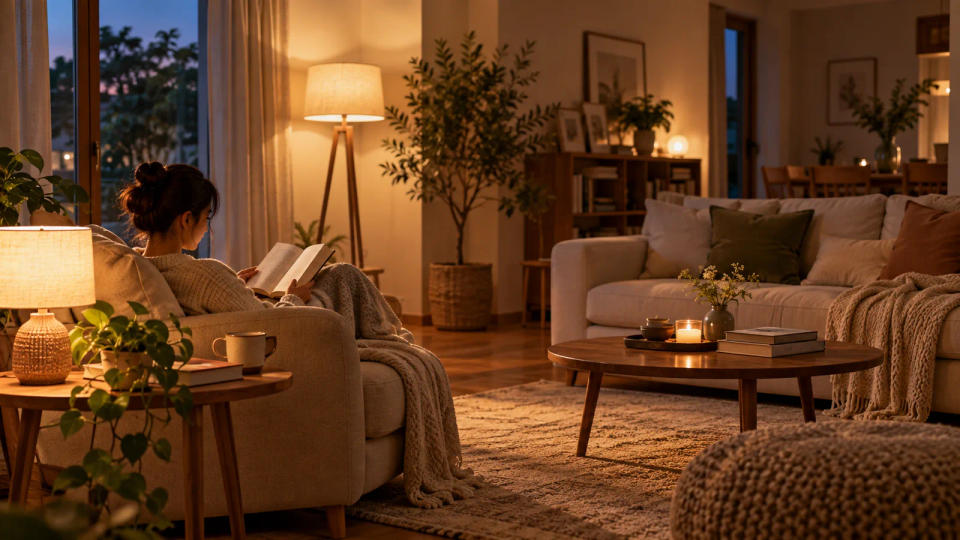
5. Improve the seat you actually use, not the one that looks best. Many homes have decorative comfort: beautiful cushions that slide around, a chair that looks inviting but hurts your back, or a sofa corner that is always missing a side table. Pay attention to where you naturally sit at the end of the day and make that spot easier on your body.
You might add one supportive cushion, move the lamp closer, keep a coaster within reach, or place a light throw nearby. These changes are inexpensive because they are specific. Instead of trying to make the entire room “cozier,” you are improving the exact place where comfort matters.
6. Leave a little breathing room in crowded areas. A home does not need to be sparse, but every corner does not need to be filled. If a room feels restless, try removing one small table, one decorative object, or one extra basket from the most crowded area. Then look again before buying anything new.
Clear walking paths matter too. When you have to turn sideways around a chair, step over a basket, or move objects every time you open a cabinet, the room quietly asks more from you. A few inches of extra space can make daily movement feel noticeably easier.
Add comfort through small, repeatable cues
7. Use one or two natural elements instead of filling the room with decor. A plant by the window, a wooden tray, a bowl of fruit, fresh branches, linen, or a simple ceramic piece can add warmth without creating more visual clutter. Choose materials and objects that feel pleasant to touch and easy to maintain.
If you like fragrance, keep it light and optional. Fresh air, clean bedding, a favorite candle, or a subtle diffuser may be enough. If anyone in the home is sensitive to scent, comfort may mean keeping the room unscented. The calmer choice is the one that suits the people who actually live there.
8. Create one small place that signals “you can stop now.” This does not need to be a dedicated meditation room or a picture-perfect reading nook. It can be one end of the sofa, a chair near a window, or a corner of the bedroom with a lamp and a small table.
Keep that spot relatively free from unfinished tasks. If possible, do not use it as a temporary home for laundry, packages, work files, or things waiting to be sorted. When one part of the house is consistently ready for rest, you do not have to create comfort from scratch every time you are tired.
A realistic example might be a small apartment where the dining table also becomes a workspace, the entry collects deliveries, and the living room has one bright ceiling fixture. You could clear only the entry console and coffee table, add a tray for daily items, move a floor lamp beside the sofa, place a basket for blankets, and keep one chair free of bags. Nothing dramatic has changed, but the room now asks less of you when you walk in.
Conclusion: aim for less friction, not a perfect home
A calmer home is not necessarily a minimal home, an expensive home, or an always-tidy home. It is a home where the things you use are easy to reach, the things you do not need are not constantly in your way, and at least a few areas feel ready for you rather than waiting for more work.
Choose one visible surface, one light source, and one place where you rest. Improve those first. Once the home starts feeling easier in the places you use most, you can decide whether anything else actually needs to change.